
1. Savannah Cat

The Savannah is probably the most famous designer cat. It was created by crossing a domestic cat with an African serval. The result is a tall, lean cat with huge ears and bold spots.
They’re athletic and extremely intelligent. Many Savannah owners teach them to walk on a leash or play fetch. They bond closely to their people and hate being ignored. That intelligence means they need a lot of enrichment or they’ll find their own entertainment.
Breed Snapshot: Origin: US. Size: Large, 12-25 lbs. Coat: Short, spotted. Lifespan: 12-20 years.
Personality: Active, curious, social.
Note: Early generation Savannahs have serval DNA and can be restricted in some states. F3 and later generations are considered domestic. TICA recognizes Savannahs and has strict rules about hybrid breeding.
2. Bengal Cat

Bengals were created by crossing the Asian leopard cat with domestic breeds. You can see it in their coat. Rosettes, marbling, and a glittery sheen that looks wild.
But don’t let the looks fool you. Modern Bengals are 100% domestic. What they kept is energy. Bengals are busy. They climb, they run, they play in water. They’re best for homes that can give them cat trees and puzzle toys.
Breed Snapshot: Origin: US. Size: Medium to Large, 8-15 lbs. Coat: Spotted or marbled glitter. Lifespan: 12-16 years.
Personality: Playful, smart, athletic.
Cornell Feline Health Center recommends lots of vertical space for active breeds like Bengals.
3. Toyger

The goal with Toygers was simple: make a cat that looks like a tiny tiger but acts like a house cat. Breeders crossed Bengals with domestic shorthairs to get those bold vertical stripes on orange fur.
Personality-wise, Toygers are the opposite of wild. They’re friendly, adaptable, and great with kids. They love attention and follow their people around the house.
Breed Snapshot: Origin: US. Size: Medium, 7-15 lbs. Coat: Orange with black stripes. Lifespan: 12-15 years.
Personality: Social, gentle, playful.
They’re still rare, so expect a waitlist and higher price from ethical breeders.
4. Chausie

Chausies come from domestic cats crossed with the Asian jungle cat. They’re big, muscular, and built for running and jumping.
This is not a couch potato breed. Chausies have strong hunting instincts and need space to burn energy. They’re curious and adventurous. Without enough stimulation, they can get destructive.
Breed Snapshot: Origin: US/Egypt. Size: Large, 15-25 lbs. Coat: Short, solid or ticked. Lifespan: 12-14 years.
Personality: Outgoing, active, intelligent.
Best for experienced owners who can provide enrichment and play.
5. Ocicat

Despite the name, Ocicats have zero wild DNA. They were created in the 1960s by crossing Siamese, Abyssinian, and American Shorthair to get a spotted “wild” look.
What you get is a social, people-oriented cat. Ocicats hate being alone. They’re vocal, playful, and love learning tricks. The spotted coat comes in many colors.
Breed Snapshot: Origin: US. Size: Medium to Large, 6-15 lbs. Coat: Spotted. Lifespan: 12-18 years.
Personality: Friendly, outgoing, smart.
They’re great family cats because they’re tolerant and love company.
6. Cheetoh Cat

The Cheetoh is a newer designer breed: a Bengal x Ocicat. Breeders wanted a big cat with bold spots and a sweet personality.
And that’s what you get. Cheetohs are large, muscular, and surprisingly gentle. They’re good with kids and adapt well to homes with other pets. They still need play and interaction daily.
Breed Snapshot: Origin: US. Size: Large, 15-23 lbs. Coat: soft, spotted, or marbled. Lifespan: 12-15 years.
Personality: Kind, affectionate, intelligent.
7. Serengeti Cat

Serengetis were bred to look like a serval but without any wild cat in the background. The cross was Bengal x Oriental Shorthair.
The result is a tall, leggy cat with huge ears and a spotted coat. They’re active and curious, but also very people-focused. They don’t like being left alone for long periods.
Breed Snapshot: Origin: US. Size: Medium, 8-15 lbs. Coat: Spotted, gold to gray. Lifespan: 10-15 years.
Personality: Playful, loving, alert.
8. Pixie-Bob
Pixie-Bobs were bred to look like a North American bobcat. Short tail, tufted ears, spotted coat. But there’s no wild blood. It’s all selective breeding.
Their personality is what makes them popular. Pixie-Bobs are loyal, calm, and very bonded to family. Many learn to play fetch and enjoy leash walks. They’re quiet and gentle.
Breed Snapshot: Origin: US. Size: Medium to Large, 8-17 lbs. Coat: Short or long, spotted tabby. Lifespan: 13-16 years.
Personality: Loyal, gentle, social.
9. Safari Cat

Safari cats are a cross between domestic cats and Geoffroy’s cat from South America. They’re rare and not recognized by most major registries yet.
They’re smart and energetic. Because of the wild ancestry, they need experienced owners who understand hybrid cats. They require a lot of space and enrichment.
Breed Snapshot: Origin: US. Size: Large, 15-25 lbs. Coat: Spotted. Lifespan: 12-17 years.
Personality: Curious, energetic, intelligent.
10. Khao Manee

The Khao Manee isn’t a hybrid, but it’s considered a designer cat because it’s so rare. This ancient Thai breed is pure white with striking eyes that can be blue, gold, or odd-eyed.
They’re very social and talkative. Khao Manees want to be part of everything you do. They’re not shy,y and they don’t do well alone.
Breed Snapshot: Origin: Thailand. Size: Medium, 8-12 lbs. Coat: Short, pure white. Lifespan: 10-12 years.
Personality: Friendly, social, vocal.
See our guide to rare cat breeds for more info.
11. Burmilla
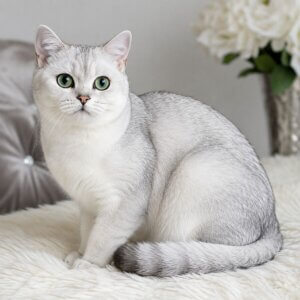
The Burmilla was an accident that turned into a breed. A Burmese and a Chinchilla Persian were bred together in the 1980s in the UK.
The result is a cat with a shimmering silver coat and a sweet personality. Burmillas are playful but gentle. They’re great for families because they’re patient and affectionate.
Breed Snapshot: Origin: UK. Size: Medium, 6-13 lbs. Coat: Short to medium, silver-shaded. Lifespan: 10-15 years.
Personality: Loving, playful, gentle.
12. Scottish Fold Hybrid
Scottish Folds are famous for folded ears. When crossed with Persians, Ragdolls, or British Shorthairs, you get designer hybrids with soft coats and calm temperaments.
These cats are popular because they look unique and act mellow. The folded ear gene can cause health issues, so ethical breeders only breed Fold to straight-eared cats. International Cat Care has guidelines on responsible breeding.
Breed Snapshot: Origin: Scotland/Global. Size: Medium, 6-13 lbs. Coat: Varies. Lifespan: 11-15 years.
Personality: Calm, loving, easygoing.
13. Peterbald

The Peterbald is a Russian designer breed: Oriental Shorthair x Donskoy. They can be completely hairless or have a fine fuzz.
They’re elegant, slender, and very social. Peterbalds crave attention and do best in homes where someone is around a lot. Because they have little to no fur, they need skin care and warmth.
Breed Snapshot: Origin: Russia. Size: Medium, 6-10 lbs. Coat: Hairless to fine. Lifespan: 12-15 years.
Personality: Affectionate, curious, social.
14. Napoleon Cat / Minuet
The Minuet, formerly called Napoleon, is Persian x Munchkin. You get the Persian’s fluffy coat and sweet face combined with short legs.
They’re gentle, playful, and look like living dolls. Despite short legs, they’re active and love to play. Grooming is needed for long-coat versions.
Breed Snapshot: Origin: US. Size: Small to Medium, 5-9 lbs. Coat: Long or short, thick. Lifespan: 12-15 years.
Personality: Sweet, loving, playful.
See our short-legged cat breeds guide.
15. Lykoi

The Lykoi is one of the newest designer breeds. Nicknamed “werewolf cats,” they have a partial hairless coat with a roan pattern.
It happened naturally from a genetic mutation, then breeders worked to make it consistent. They’re active, smart, and very bonded to their people. The look is unusual, but the personality is pure house cat.
Breed Snapshot: Origin: US. Size: Medium, 6-11 lbs. Coat: Partial, roan. Lifespan: 12-15 years.
Personality: Active, affectionate, intelligent.
What To Know Before Getting a Designer Cat
Designer cats are beautiful, but they’re not for everyone.
1. Cost: Because they’re rare and take time to breed, most designer cats cost $1000-$5000+. Hybrids like early-gen Savannahs can be $10,000+.
2. Care needs: Active breeds like Bengal and Savannah need cat trees, toys, and play time. Hairless breeds like Peterbald need skin care.
3. Ethics: Choose breeders who health-test. AVMA recommends screening for HCM and genetic issues.
4. Legality: Some hybrids are restricted. Check local laws before buying a Savannah or Safari.
Final Thoughts
Designer cat breeds give you something you can’t get from a standard breed: a very specific look combined with a predictable personality.
Some, like the Savannah and Bengal, bring wild energy into your home. Others like the Burmilla and Khao Manee bring calm companionship and rare beauty.
Before you choose, research the breed’s needs honestly. The right designer cat can be an amazing companion for 12-18 years.
FAQs
1. What is a designer cat breed?
A designer cat is intentionally bred from two or more breeds to create specific physical traits and temperament. Some include recent wild ancestry.
2. Are designer cats more expensive?
Yes. Rarity, health testing, and breeding difficulty drive prices from $1000 to $20,000 depending on breed and generation.
3. Do designer cats need special care?
Some do. Active hybrids need more enrichment. Hairless breeds need skin care. Always ask the breeder about specific needs.
4. Are designer cats good for families?
Many are. Breeds like Ocicat, Toyger, and Burmilla are known for being social and good with kids. Match energy level to your home.
5. What is the rarest designer cat?
Breeds like Safari and early-gen Savannah are among the rarest due to breeding difficulty and legal restrictions.