
 Grumpy Cat became one of the most recognizable cats on the internet. Her real name was Tardar Sauce. The first photo of her went viral in 2012, and people immediately asked the same question: what breed is she?The answer is not as simple as “Persian” or “Ragdoll.” Grumpy Cat was a mixed-breed domestic cat. Her unique look came from a mix of genetics, not from a breed standard.In this guide, we’ll cover her breed background, physical traits, personality, health, and what to know if you have a cat with similar features.
Grumpy Cat Breed Facts
Real Name: Tardar Sauce
Breed Type: Domestic Mixed Breed
Reported Mix: Domestic Shorthair with Snowshoe traits
Born: April 4, 2012
Coat: Short, dense
Colors: Black, orange, and white with white paws and chest
Her owners confirmed she was not a purebred. The white paws and facial blaze are common in Snowshoe cats, but her body type and coat were domestic shorthair.
Physical Appearance: Why She Looked Different
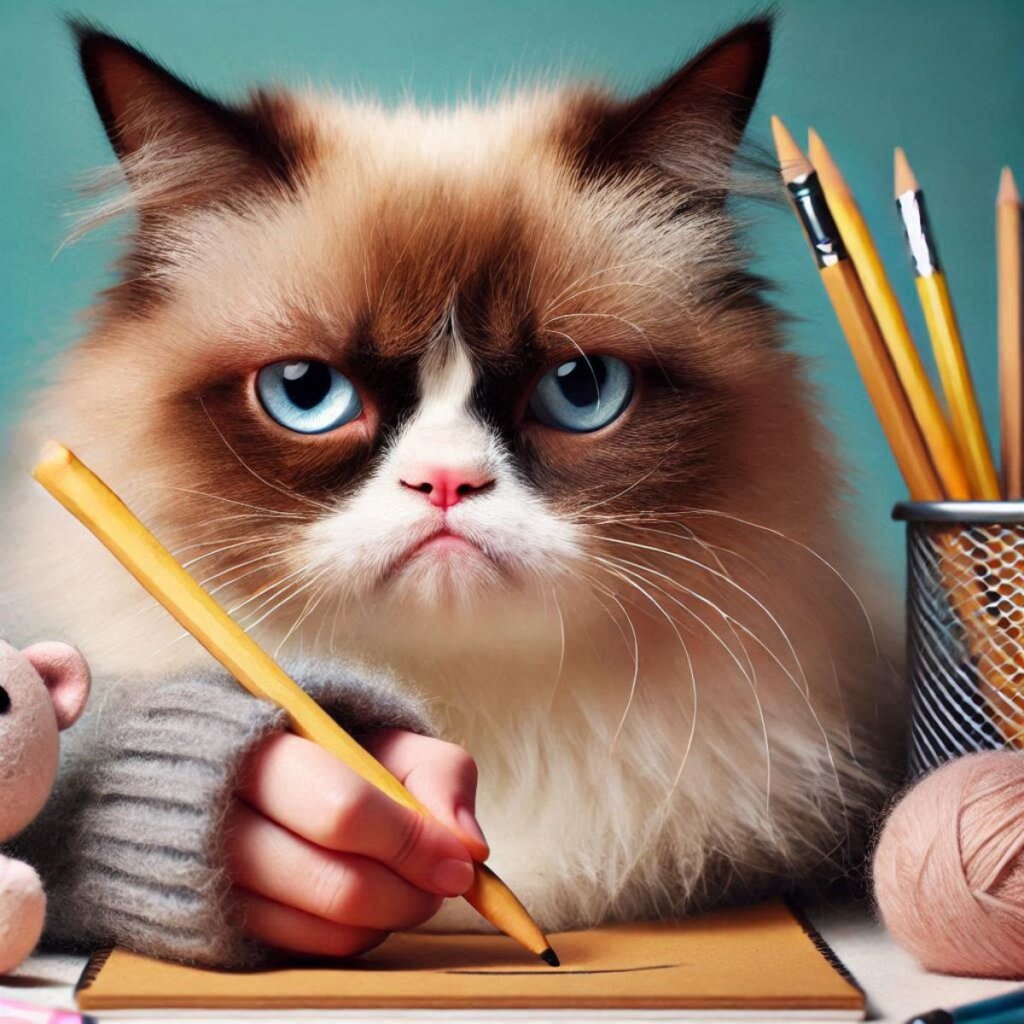
Three main traits made Grumpy Cat stand out:
1. Feline Dwarfism
Tardar had a genetic condition that caused short legs and a compact body. This is different from the Munchkin gene. Dwarfism in cats can happen randomly and is not tied to a specific breed.
It gave her a low, sturdy build. Her proportions were smaller than her littermates.
2. Underbite and Flat Face
She had a noticeable underbite. Her lower jaw sat in front of her upper jaw. Combined with a flat facial profile, this created the permanent frown.
This is not a breed trait. It can occur in any mixed-breed cat.
3. Eye and Facial Structure
She had mild crossed eyes and a round face. Her ears were normal and upright. Her fur was short and required minimal grooming.
Cornell Feline Health Center explains that facial asymmetry and dwarfism do not automatically mean a cat is unhealthy, but they should be monitored by a vet.
Personality and Temperament
Despite the name, Grumpy Cat was not actually grumpy.
Reports from her family described her as the following:
- Calm and low-energy indoors
- Friendly with humans and other pets
- Tolerant of being handled
- Quiet and observant
Her personality matched many domestic shorthairs. She liked routine, comfortable spots, and attention on her terms. The “grumpy” look was only cosmetic.
Health and Care for Cats With Similar Traits
If your cat has dwarfism, a flat face, or an underbite, here’s what to focus on:
1. Regular Veterinary Checkups
Cats with dwarfism should have yearly exams. Vets will check joints, the spine, and mobility. Early detection helps prevent issues. ASPCA recommends annual wellness visits for all adult cats.
2. Dental Care
An underbite can cause teeth to wear unevenly. Brush 2-3 times per week with cat-safe toothpaste. Provide dental treats and schedule professional cleanings.
3. Mobility and Home Setup
Use low-entry litter boxes. Place ramps or steps to help them reach couches and beds. Avoid forcing jumps from high places to protect joints.
4. Weight Control
Short-legged cats gain weight easily. Measure food portions. Use puzzle feeders and daily play sessions to keep them active.
5. Diet
Feed a high-protein, grain-free cat food. If dental issues are present, soft food may be easier. Always provide fresh water.
Breed Comparison: Cats Similar to Grumpy Cat
People often compare Grumpy Cat to purebreds. Here’s how she differed:
| Breed | Shared Trait | Key Difference |
|---|---|---|
| Snowshoe | White paws, white facial markings | Normal leg length, no underbite |
| Munchkin | Short legs | Normal face, bred trait |
| Exotic Shorthair | Flat face, round head | Normal legs, stocky build |
| Domestic Shorthair | Mixed colors, short coat | Normal proportions |
None of these breeds would produce the same look as Tardar. Her appearance was a one-time combination of genetics.
Genetics: Can You Breed a Cat Like Grumpy Cat?
Short answer: no, and you shouldn’t try.
Grumpy Cat’s look came from random mutations. Responsible breeders do not breed for dwarfism or severe underbites because it can cause health problems.
If you like short-legged cats, look at ethically bred Munchkins. If you like flat faces, research Persians and be aware of breathing issues.
The best option is adoption. Shelters have many mixed-breed cats with unique faces and body types.
Common Misconceptions About Grumpy Cat
1. “She was a Persian.”
False. Persians have long fur, a very flat face, and large round eyes. Grumpy Cat had short fur and a different body type.
2. “She was a ragdoll.”
False. Ragdolls are large and semi-longhaired and have blue eyes with color points. Tardar was smaller and short-haired.
3. “Her grumpy face meant she was unhappy.”
False. Facial structure does not equal mood. By all accounts, she was a calm, well-adjusted pet.
How to Care for a Mixed-Breed Cat
Most cats in shelters are domestic mixed breeds, like Tardar. Care is straightforward:
- Grooming: Weekly brushing for short coats
- Exercise: 15 minutes of play, twice daily
- Enrichment: Cat trees, scratching posts, window perches
- Health: Vaccines, flea prevention, annual bloodwork after age 7
Mixed breeds often have fewer inherited health problems due to genetic diversity.
Frequently Asked Questions
1. What breed was Grumpy Cat?
She was a domestic mixed-breed cat with traits similar to those of a Snowshoe and a domestic shorthair.
2. Was Grumpy Cat sick?
She lived with dwarfism and an underbite. She received regular veterinary care and lived a normal life until age 7.
3. Why did Grumpy Cat have short legs?
She had a form of feline dwarfism, a genetic condition that affects bone growth.
4. Can I buy a kitten that looks like Grumpy Cat?
You cannot reliably breed for that look. Adopt, and you may find a cat with similar features.
5. Are cats with underbites harder to care for?
Not necessarily. They may need extra dental care and soft food, but many live full, healthy lives.
Final Thoughts
Grumpy Cat was not a breed. She was a domestic mixed-breed cat whose appearance came from dwarfism and an underbite.
That combination made her instantly recognizable. But beyond the face, she was a typical house cat who needed food, vet care, and love.
If you have a cat with unique features, focus on health first. Provide good nutrition, dental care, and regular vet visits. Appearance is secondary.
Tardar Sauce showed that mixed-breed cats can become icons. Her look was rare, but the care she needed was the same as any other cat.